Find out where your recycling goes, how it is processed and how better recycling habits are keeping valuable materials out of landfill.
Jump to a Topic
Where does my recycling go?
Mixed recycling collected in your yellow lid bins goes to the Materials Recovery Facility (MRF) in Bairnsdale for sorting (into metals, plastics, glass, paper and cardboard) before being shipped to various recyclers in Melbourne for processing.
Recycling keeps these items out of landfill and supports the local circular economy, with crushed glass from our recycling used as a sand alternative in construction in new footpaths and roads.
Please place recycling items loose in the mixed recycling (yellow lid) bin as bagged items and soft plastic cannot be recycled.
Our 2024-25 Waste Audit showed that our community is getting better at it, with the general rubbish (red lid) bin collections having:
11% less compostable waste
6% less recyclable waste
3% less textile waste.
Check out our Waste Wise Guide for tips on what can be recycled in East Gippsland, and where it goes instead of the general waste (red lid) bin.
Free Recycling
Packaging
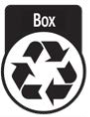
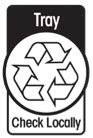
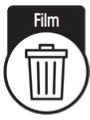
New packaging uses a lot of energy and resources to create and a long time to break down. The best way to reduce packaging waste is to avoid buying new items in the first place, and reusing items already in circulation. Packaging includes plastic containers, soft plastics, steel cans, aluminium, paper, cardboard, glass jars, bottles, cling wrap and polystyrene. Australasian Recycling Labels give clear instructions on which packaging components can be recycled and which parts go in the rubbish bin.
Recycling and General Rubbish Symbols
We accept packing with these symbols for recycling. Place in the mixed recycling (yellow lid) bin as it is. Make sures it is clean. Each piece needs to go in separately, not in a bag or box.
White logo: Follow additional instructions on packaging before putting in mixed recycling (yellow lid) bin. E.g. remove handles or scrunch into ball.
If the instructions aren’t followed, the packaging can’t be recycled and it will contaminate the recycling stream. In that case, it needs to go in the general rubbish (red lid) bin.
This type of packaging can’t be recycled locally. Put in general rubbish (red lid) bin, take to landfill or a transfer station.
Paper and Cardboard
Before binning your paper and cardboard, consider if you could reuse it for wrapping paper, craft projects, gift boxes, kids' costumes or scrap paper for shopping lists.
Once collected, paper and cardboard goes to a papermill for separating into types and grades, washing to remove glue, ink, film and other contaminants, before being mixed with water to create pulp that becomes future recycled paper goods.
Large quantities that can’t fit in your recycling bin can be taken to landfill or a transfer station for FREE.
We accept:
Carboard and paper packaging.
Newspapers, telephone books, any coloured paper, letters and envelopes (even with windows), cereal boxes, shoeboxes, magazines, and the non-greasy side of pizza boxes.
Please make sure the paper is clean.
Put in general rubbish (red lid) bin, take to landfill or a transfer station:
Tetra Paks and multiple layered cardboard packaging.
Waxed or greasy paper/cardboard.
Hard Plastics
There are many different types of plastics and the types that can be recycled often varies between councils making it hard to navigate how to do the right thing.
In East Gippsland, we can recycle plastics with numbers 1, 2, 5 through your mixed recycling (yellow lid) bin. We can also recycle some plastics with numbers 3, 4, 6 and 7 through the same bin – see below for exceptions. Please ensure plastic containers are clean and empty when recycling them.
We accept:
1 – PETE (polyethylene terephthalate)
E.g. soft drink bottles and water bottles.
2 – HDPE (high-density polyethylene)
E.g. shampoo bottles and milk bottles.
3 – PVC (polyvinyl chloride or plasticised polyvinyl)
Only food grade PVC. E.g. cordial bottles.
4 – LDPE (low-density polyethylene)
E.g. squishable sauce bottles.
5 – PP (polypropylene)
E.g. ice cream containers and take-away food containers.
7 – Other. Mix of multiple plastic types.
E.g. laundry detergent containers.
Bottle caps
Can be recycled if they are still attached to the bottle.
Put in general rubbish (red lid) bin, take to landfill or a transfer station:
Soft plastic such as bread bags, produce bags, bin liners, chip packets, biscuit wrappers and plastic bags.
PVC toys, shower curtains, plastic pipes, window frames or flooring.
6 – PS (polystyrene)
Only accepted at transfer stations, or landfill. Must be white, clean and dry.
Loose bottle caps
Can’t be recycled if they are not still on the bottle.
Glass and Ceramics
Some glass can be easily recycled while other types can’t as they contain materials that contaminate the recycling process.
We accept:
Glass bottles and jars (food grade)
Recycle in mixed recycling (yellow lid) bin. Ensure items are clean and free of food. Remove lids. Any colour glass is OK.
Put in general rubbish (red lid) bin, take to landfill or a transfer station:
Drinking glasses, mirrors and window glass
Ceramics – can also be donated to Op Shops if undamaged.
Metal
Not all metal can be included in the mixed recycling bin – some needs to be taken to your local transfer station to ensure it is recycled properly.
We accept:
Aluminium cans and foil
Recycle in mixed recycling (yellow lid) bin. Make sure the foil is clean (rinse in warm water if needed) before rolling into an orange-sized ball.
Steel food cans, pet food tins, aerosol cans (empty) and bottle caps
Recycle in mixed recycling bin. Ensure items are clean and free of food.
Steel tools, metal containers and pipes, corrugated iron, metal cookware and camping equipment
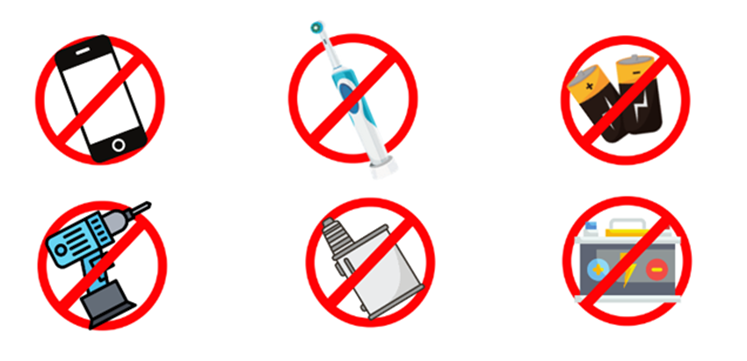
Batteries and electronic waste – It is illegal to pute-waste in household rubbish or landfill in Victoria. Keeping e-waste out of landfill protects the environment. DON'T put it in a bin. Take batteries to your closest Bcycle drop off location.
Electronic waste can be recycled at the following waste and recycling sites.
Bairnsdale Landfill
Bruthen
Lakes Entrance
Mallacoota
Metung
Omeo
Orbost
Small e-waste items such as electric toothbrushes or Christmas lights can be deposited at the following Recycling Hubs
Bairnsdale Aquatic and Recreation Centre
Bairnsdale Library
Lakes Entrance Aquadome
Lakes Entrance Service Centre
Mallacoota Service Centre
Omeo Service Centre
Orbost Service Centre
Textiles
Reducing textile waste helps cut greenhouse gas emissions, saves landfill space, supports the circular economy and encourages sustainable habits in our community. Textiles are sorted to maximise their value through reusing/re-wearing, repairing for reuse, repurposing, upcycling, recycling and converting waste to energy. In 2024, textiles made up 3% of waste collected in East Gippsland’s general rubbish (red lid) bins, down from 7% in 2021.
There is a FREE textile recycling drop-off at Bairnsdale Landfill.
We accept: Soft toys, clothing and shoes, bags and belts, clean underwear, swimwear and household textiles. It must be clean.
We can’t recycle: Soiled or dirty textiles, or pet bedding. Bulky items such as pillows, doonas or carpets.
Container Deposit Scheme
Victoria’s Container Deposit Scheme provides a 10c refund for eligible cans and bottles.
Tambo Waste Depot: High-speed counting machine for bulk processing and options of cash refund, electronic refund, or donation to a registered partner. Located at 56 McMillan Street, Bairnsdale.
Reverse Vending Machines: Self-service return points located near supermarkets and in public spaces across Victoria. Refunds are available via EFT, PayPal, or donation.
Over-the-counter refund points: Operated by local businesses and organisations who count your containers and provide refunds on delivery.
CDS accepts: Most aluminium, glass, plastic and liquid paperboard (carton) drink containers, 150ml to 3 litres. Keep the lids on as we recycle them, too.
Look for the 10c mark on the label often near the barcode.
Some containers aren’t eligible for a refund, e.g. less than 150ml or greater than 3 litres.
These can be recycled via your mixed recycling (yellow lid) bin.
Resources Recovery Program
Find out what goes in your mixed recycling (yellow lid) bin.
See our A-Z of Waste Guide for detailed advice on where items should go.
Batteries can be recycled in Australia. Unfortunately, Australians throw away more than 300 million batteries in ordinary household waste, meaning a staggering 8,000 tonnes ends up in landfill.
Our waste service survey shows that a quarter of our shire's residents are unaware that batteries and waste trucks don’t mix. You should never bin your batteries.
When batteries are thrown away in regular kerbside bins, they create a significant safety hazard. When compacted in trucks or facilities, batteries can spark and start a fire, endangering drivers, operators, the community and the environment.
Batteries include all alkaline and lithium household batteries, lead-acid vehicle batteries and those that can be found in a wide variety of household items, from electric toothbrushes, rechargeable children’s toys, power tools, mobile phones and electronic devices, commonly called embedded batteries.
It’s important for everyone to remember that all batteries need to be correctly recycled when it’s time for an upgrade.
Batteries should never be put in kerbside bins and should instead be taken to a specialist drop off point located throughout East Gippsland, such as a B-Cycle drop-off point, supermarkets and battery retailers, or our Waste and Resource Recovery facilities.
B-Cycle has four simple steps to help protect us all:
Never dispose of batteries in waste or recycling bins
Store your batteries safely
Tape used battery terminals with clear sticky tape
Take used batteries to a battery recycling drop off point conveniently located throughout East Gippsland
Related Documents
No items found.
Success! Your feedback was successfully submitted.
There was an error with your submission - please try again.